
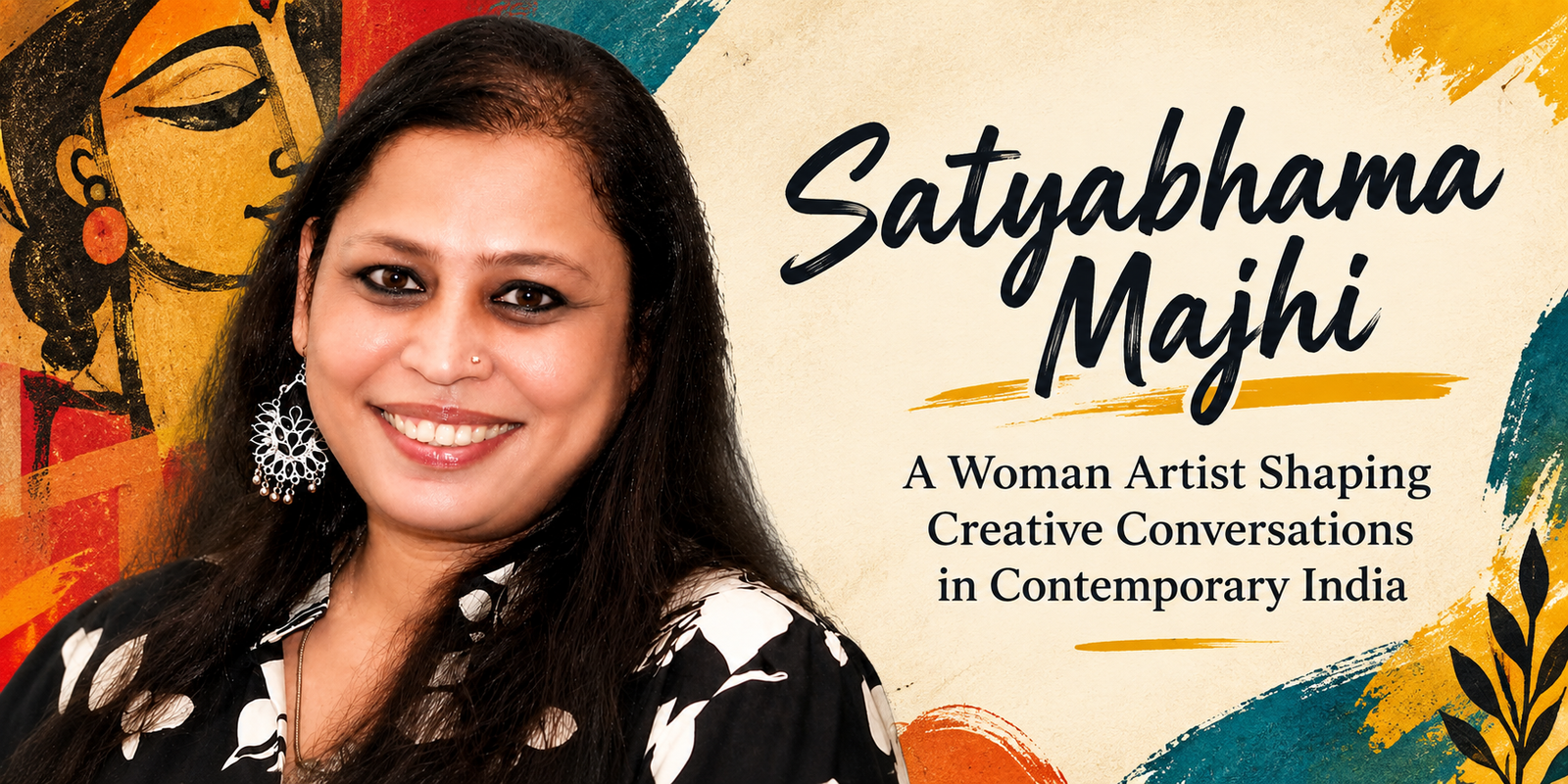
Contemporary art is often associated with experimentation, new materials, and unconventional ideas. Yet behind many powerful artistic practices lies something much simpler: the ability to observe.
For Indian contemporary artist Satyabhama Majhi, observation has become an important foundation of artistic practice. Whether she is looking at urban life in Bhubaneswar, spending time with communities, studying landscapes, interacting with children, developing public art, or exploring traditional visual practices, the process begins with paying attention.
Her art demonstrates how ordinary experiences can become meaningful creative material when an artist looks beyond the surface.
Looking Before Creating
For Majhi, observation is not simply seeing.
It involves spending time with a place, understanding its atmosphere, noticing relationships between people and their surroundings, and recognising details that might otherwise be overlooked.
This approach has influenced the development of her artistic vocabulary across painting, sculpture, installation, photography, mixed media, and public art.
Instead of beginning with a predetermined image, observation can allow the environment to suggest questions.
What is changing?
What remains?
How do people interact with a place?
What memories are connected with it?
How does nature influence everyday life?
Such questions can gradually become the foundation for artistic expression.
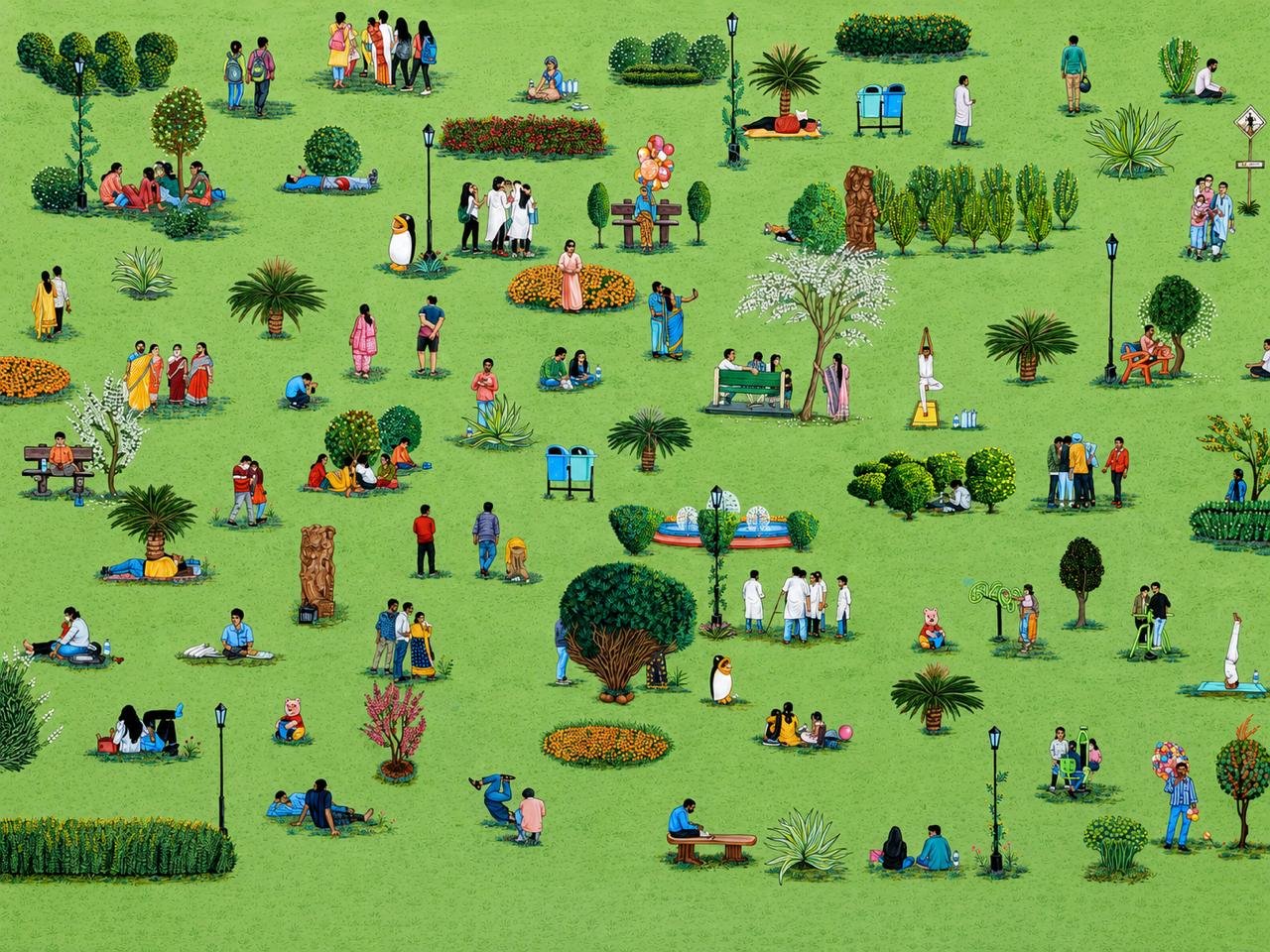
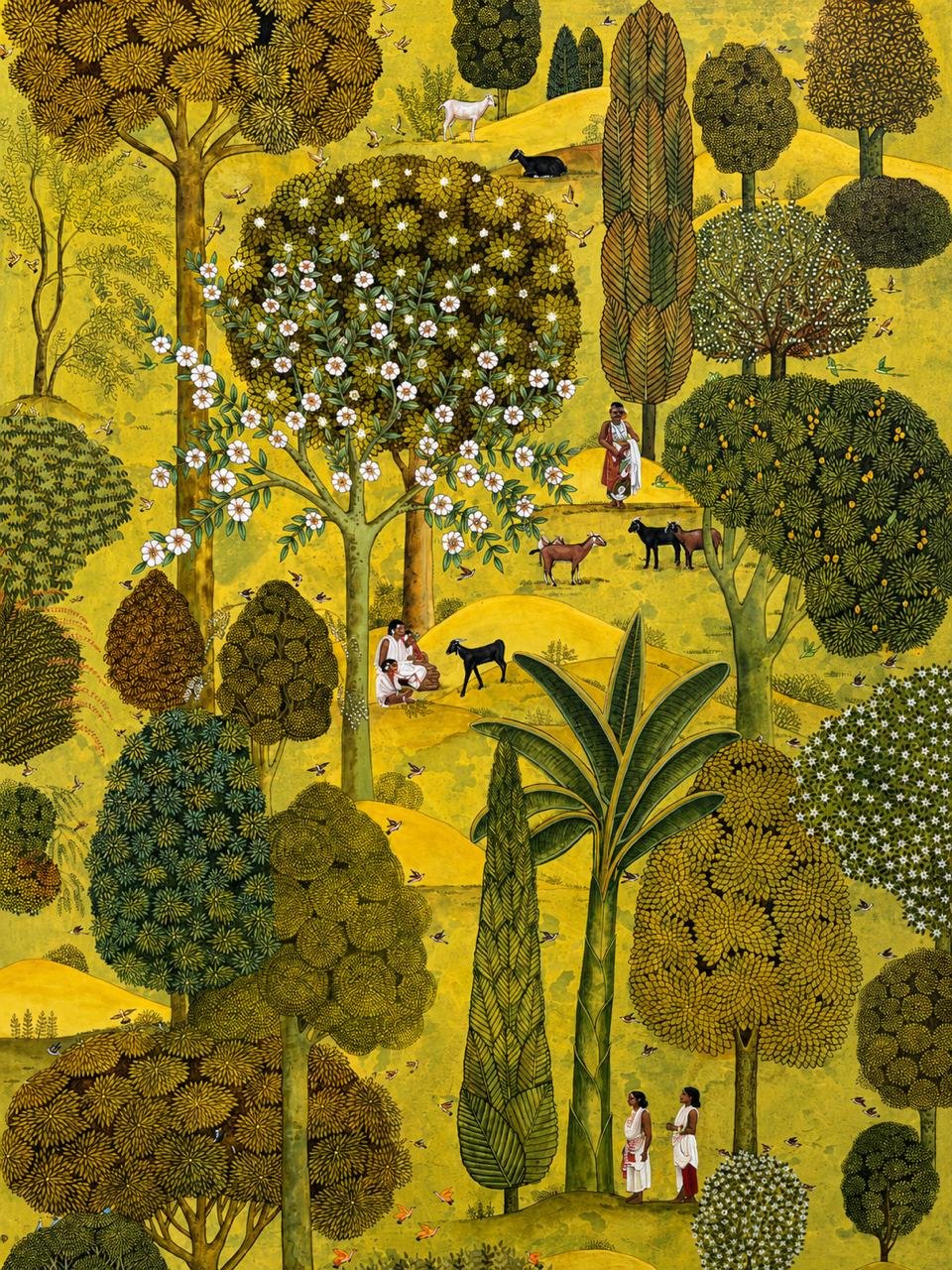
Everyday Life as a Source of Art
Majhi has repeatedly shown an interest in ordinary experiences.
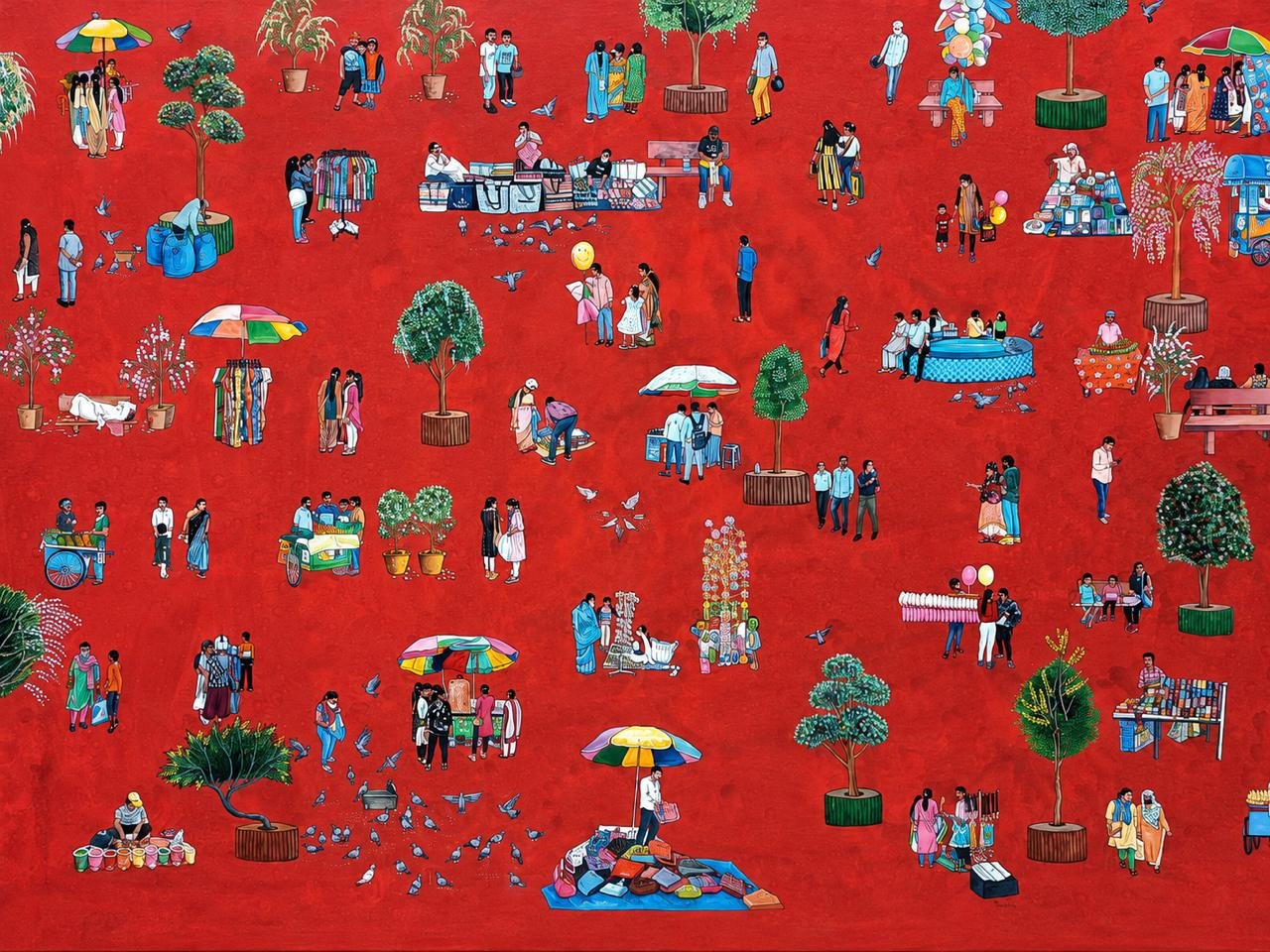
Urban neighbourhoods, household activities, journeys, trees, festivals, animals, landscapes, and community life can all become subjects of artistic reflection.
The significance of these subjects comes from the experiences attached to them.
A familiar street may contain memories of social change. A household activity may reveal patterns of labour and tradition. A landscape may represent not only geography but also cultural identity.
By observing everyday life carefully, the artist can uncover layers of meaning within apparently ordinary situations.
The City as a Living Environment
Bhubaneswar provides an important context for understanding Majhi’s interest in observation.
As a growing urban centre, the city contains multiple layers of experience.
Modern buildings, roads, public spaces, neighbourhoods, cultural institutions, and older traditions exist alongside one another.
Urban transformation therefore becomes more than an architectural process.
It changes how people move, work, communicate, remember places, and experience their surroundings.
Majhi’s artistic interest in urban life reflects this complexity.
Her observations can turn changes in the city into visual narratives about memory and transformation.
Listening to Communities
Observation in Majhi’s practice also extends beyond visual perception.
Community engagement requires listening.
Her long-term engagement with the Dongaria Kondh community has involved learning about cultural practices, livelihood patterns, indigenous visual traditions, and relationships with the natural environment.
Such engagement demonstrates the difference between looking at a community and learning from a community.
The artist does not have to treat people simply as subjects to be represented.
Instead, interaction can become an opportunity to understand knowledge systems and lived experiences.
This approach gives socially engaged art a deeper dimension.
Niyamgiri Through Experience
The landscape of Niyamgiri provides a particularly strong example of how observation can become artistic interpretation.
Majhi’s engagement with the region has influenced her understanding of landscape, movement, community, and cultural identity.
The mountains are not simply scenic subjects.
They are connected with everyday activities, livelihoods, traditions, spiritual associations, and relationships with the environment.
The artist’s response therefore moves beyond conventional landscape representation.
The physical characteristics of the region become connected with human experience.
From Observation to Symbol
An important part of an artist’s creative process is deciding what to retain from an experience.
Majhi’s recurring triangle motif provides an example.
The triangle can be associated with the silhouette of the Niyamgiri hills and can also operate as a broader visual symbol.
Through artistic transformation, a complex landscape can become a simple geometric form.
The viewer may see only a triangle, but behind that form can exist memories of mountains, cultural geography, stability, and place.
This is one of the ways observation becomes visual language.
The Meaning of Movement
Observation can also reveal patterns of physical movement.
Majhi’s work Up and Down, inspired by life in Niyamgiri, reflects on the repeated movement of going uphill and downhill.
The physical action is part of everyday life.
But through artistic interpretation, it becomes something larger—a reflection on human movement through changing circumstances and opportunities.
The work demonstrates how close observation of daily life can produce an idea with broader human relevance.
Learning From Children
Majhi’s work with children provides another important example.
Over approximately fifteen years, she has participated in workshops involving schools, educational communities, residential institutions, children’s festivals, and other initiatives.
Her approach encourages children to observe their own experiences rather than simply imitate established images.
They may draw a family activity, a tree, an animal, a journey, a festival, or something remembered from everyday life.
This method reinforces a fundamental principle of creativity: personal observation can be a powerful source of original expression.
Observation and Memory
What people observe is often connected with what they remember.
A visual experience may remain in memory long after the original moment has disappeared.
Artists can return to these memories and reinterpret them.
This relationship between observation and memory is visible in Majhi’s broader interest in cultural identity, everyday life, changing environments, and community experience.
The artwork does not necessarily reproduce a memory exactly.
Instead, memory can be transformed into colour, form, composition, texture, or narrative.
Materials as Objects of Observation
Observation can also influence material choices.
Majhi’s use of natural pigments reflects attention to the materials available within particular cultural and environmental contexts.
Materials such as chalk stone, charcoal, turmeric, geru soil, and brown stone can become sources of pigment.
Their significance lies not only in their colour but also in their relationship with the earth and traditional practices.
The material itself carries a story.
Through using it, the artist can connect visual expression with physical environment.
Observing Cultural Practices
Traditional and indigenous visual practices contain knowledge that may not always be recorded in conventional written form.
Patterns, symbols, materials, techniques, rituals, and forms of making can transmit information across generations.
Majhi’s engagement with traditional art education and indigenous communities has encouraged an understanding of these practices through direct observation and interaction.
This helps explain why traditional knowledge appears in her work not merely as decoration but as a source of artistic thought.
Public Art and Observing the Audience
Observation also continues after an artwork is created.
Public art gives artists an opportunity to see how people respond to work in everyday environments.
A mural placed on a public wall becomes part of the daily life of a neighbourhood.
People may pass it while walking, travelling to work, going to school, or visiting nearby places.
The artwork therefore develops a relationship with an audience that has not necessarily entered an art gallery.
Majhi’s public-art practice reflects this expanded understanding of artistic communication.
The Artist as Observer and Facilitator
Majhi’s roles as artist, curator, educator, and community art practitioner are connected by this same principle.
The artist is not always the person who speaks first.
Sometimes the artist observes, listens, asks questions, facilitates participation, and then translates experiences into creative form.
This approach is particularly important in collaborative and community-based projects.
It allows artistic practice to become a process of exchange.
Observation in Collective Art
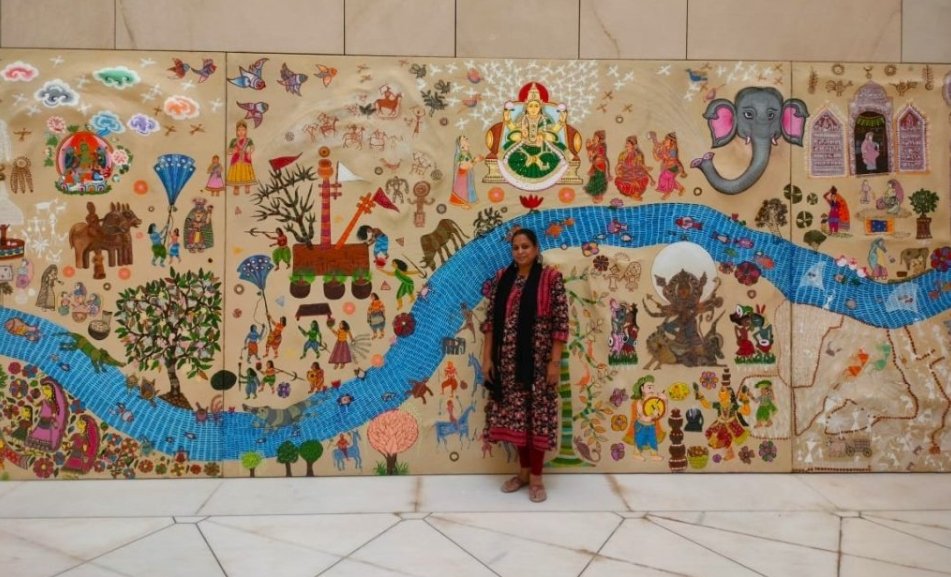
The 2023 People’s Wall – Jan, Janani and Janmabhumi project provides another example of how diverse experiences can come together through art.
Majhi served as a Co-Sutradhar and creative contributor to the participatory project, which involved women artists and artisans from different regions of India.
Such a project requires attention to different artistic languages and regional traditions.
Observation becomes a way of recognising differences while helping them function within a shared visual framework.
Observation and Contemporary Art
In contemporary art, observation can be just as important as technological experimentation.
An artist does not necessarily need the newest medium to create meaningful work.
A careful understanding of people, place, materials, and social change can itself generate contemporary ideas.
Majhi’s practice illustrates this possibility.
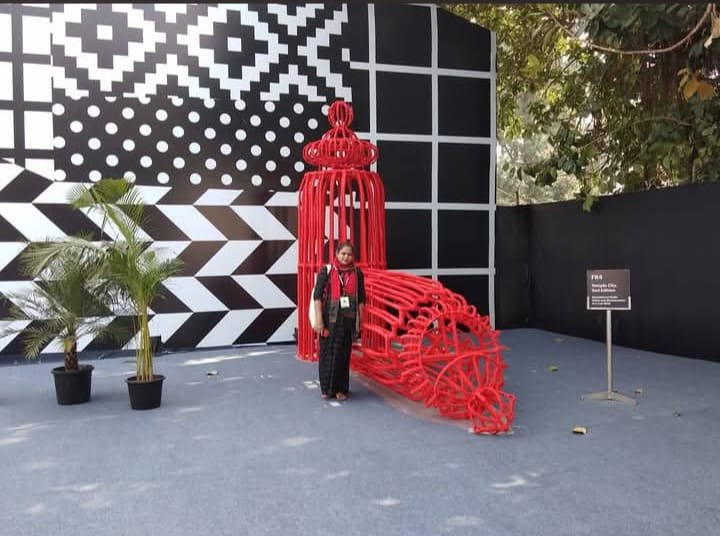
She can work with natural pigments, traditional visual references, photography, installation, sculpture, public walls, or mixed media while maintaining an underlying commitment to observing the world around her.
Turning Experience Into Art
The journey from observation to artwork is not automatic.
An artist must interpret what has been seen and experienced.
This transformation involves selection, imagination, composition, material decisions, and experimentation.
Majhi’s multidisciplinary practice provides many possible ways to make that transformation.
An experience can become a painting.
A landscape can become a geometric form.
A community encounter can influence a public artwork.
A child’s observation can become the basis for a creative workshop.
A natural material can become pigment.
The same fundamental process—experience becoming expression—can therefore operate across different media.
A Practice Rooted in Attention
One of the defining qualities of Majhi’s artistic journey is this sustained attention to the world around her.
Her practice does not separate art completely from everyday experience.
The city, village, mountain, community, classroom, public wall, and natural environment can all become spaces of artistic inquiry.
This creates a practice in which the boundaries between studio, community, education, and public space become increasingly flexible.
Conclusion
Satyabhama Majhi’s artistic journey demonstrates that observation can be a powerful contemporary artistic method.
By looking closely at everyday life, listening to communities, experiencing landscapes, studying cultural practices, working with children, and engaging with public spaces, she transforms ordinary experiences into artistic questions.
Her response to Niyamgiri, her interest in urban change, her use of natural materials, her community engagement, and her public-art practice all reveal different forms of attentive observation.
The significance of this approach lies in its simplicity.
Before an artwork becomes an object, there is often an experience.
Before an experience becomes an artistic idea, there is observation.
And before observation becomes meaningful visual expression, there is the willingness to look closely, listen carefully, and remain open to what a place or community has to say.
For Satyabhama Majhi, this attention to the world has become more than a working method. It has become an important part of the artistic language through which she understands people, places, memory, culture, and change.

