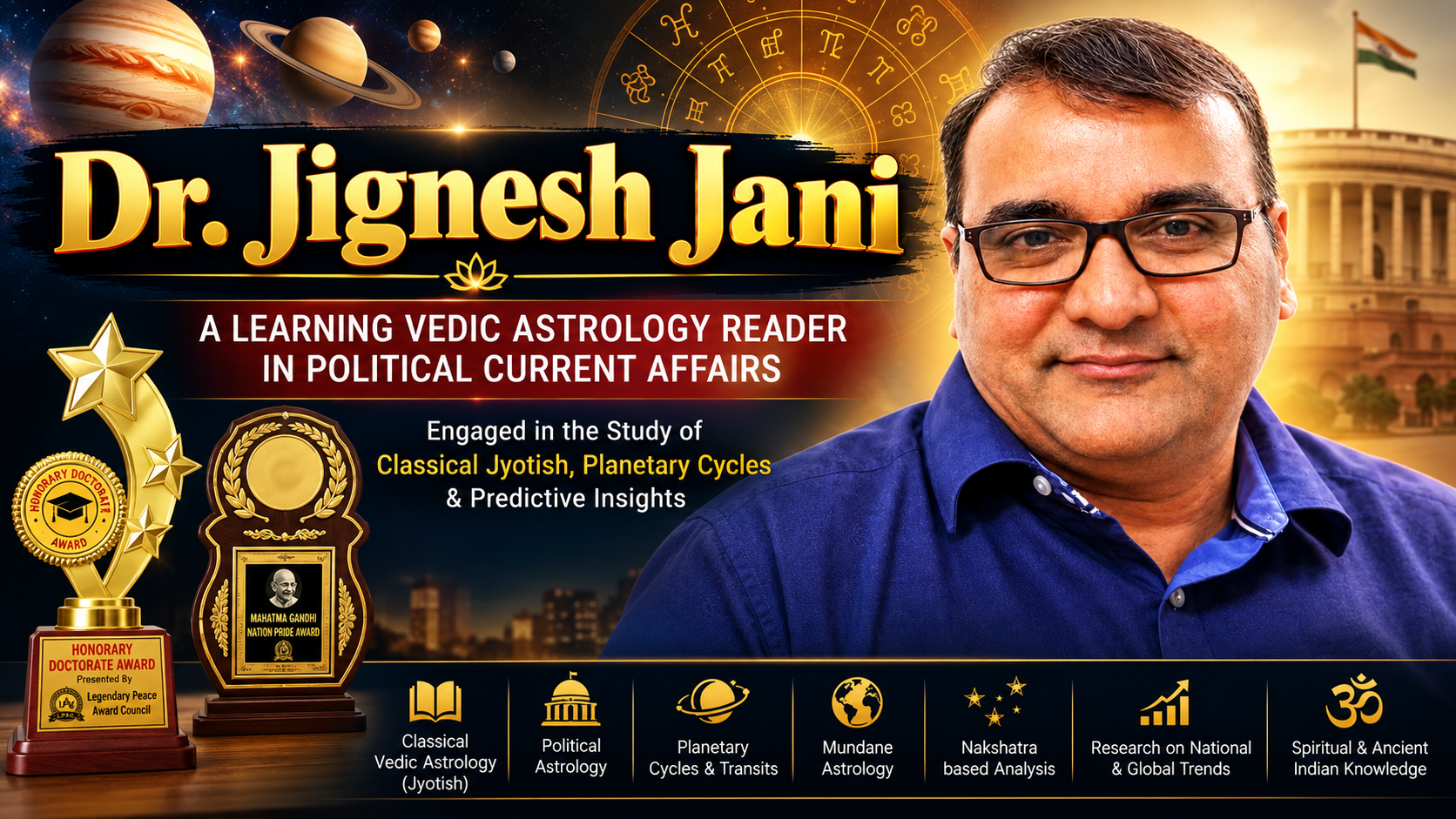
Ahmedabad, July 10: Vedic astrology researcher Dr. Jignesh Jani has stated that while traditional Vedic astrology offers symbolic interpretations of planetary movements, the future of international relations will ultimately be determined by diplomacy, responsible governance, and the decisions of world leaders. According to Dr. Jani, astrology should be viewed as a traditional philosophical system that encourages reflection on collective human experiences rather than a scientifically established method for predicting geopolitical events.
Dr. Jani explained that many Vedic astrologers currently interpret the Mars–Rahu conjunction (Angarak Yoga) as symbolizing assertive energy, strategic planning, military preparedness, and periods of heightened geopolitical attention. He also referred to the Saturn–Neptune alignment, which is commonly associated in various astrological traditions with institutional transformation, ideological shifts, changing alliances, and the emergence of new global power structures.
While these symbolic interpretations have long been part of classical astrological study, Dr. Jani emphasized that real-world developments are influenced by diplomacy, economic policies, technological innovation, defense strategies, and cooperation among governments. He stressed that planetary positions alone cannot determine political outcomes, military decisions, or international relations.
Highlighting the traditional significance of Jupiter, Dr. Jani noted that the planet represents wisdom, ethics, justice, education, and diplomacy in Vedic astrology. Many practitioners believe Jupiter symbolizes opportunities for dialogue, peaceful negotiations, and balanced leadership during periods of uncertainty.
“Planetary symbolism can encourage thoughtful reflection, but lasting peace is achieved through human action,” Dr. Jignesh Jani said. “The future depends on governments, international institutions, and leaders who prioritize diplomacy, cooperation, and responsible decision-making over conflict.”
Dr. Jani further encouraged readers to understand Vedic astrology within its traditional and cultural context while relying on factual geopolitical analysis for understanding international affairs. He said that respecting both ancient knowledge and modern evidence-based research creates a more balanced perspective on global developments.
Concluding his remarks, Dr. Jani expressed optimism that continued diplomatic engagement, constructive international dialogue, and ethical leadership will help nations overcome present challenges, strengthen global partnerships, and build a more peaceful, stable, and prosperous future for generations to come.