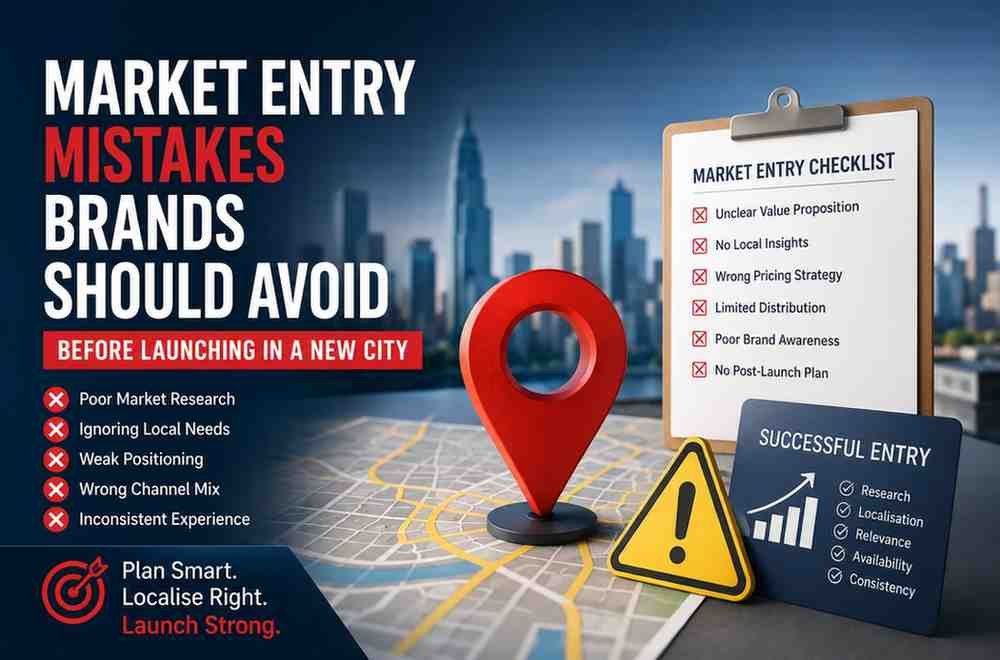
Entering a new city can look simple from the outside. A business identifies demand, appoints a distributor, launches advertising and expects customers to respond. But many market-entry plans fail because the brand assumes that success in one city automatically creates trust in another.
A new market needs more than visibility. It needs relevance, proof and a simple purchase path.
Mistake One: Launching Before the Brand Story Is Clear
The first mistake is trying to communicate everything at once. New customers do not need a complete company history, every product feature and every offer. They need one clear reason to notice the brand.
Before spending on campaigns, businesses should ensure their website, landing pages and search presence explain the offer consistently. A strong SEO and GEO optimisation strategy can help potential buyers find clear answers while they are actively researching alternatives.
Physical launch experiences also matter. Choosing the right corporate event venue gives a brand space to demonstrate the product, meet partners and create useful proof rather than relying only on promotional messages.
Mistake Two: Treating Every City Like the Previous One
Customers in each market have different language preferences, media habits, price expectations and trust signals. Copying the same campaign into a new city often creates attention but not action.
The strongest market-entry plans usually avoid three shortcuts:
- Using one generic creative for every language market
- Sending customers to unclear or slow purchase pages
- Launching demand before stock, partners and support are ready
A localised Indore video editing workflow can help brands adapt product demonstrations, customer stories and sales content for different regions. The audience-first approach behind rural-development brand identity also offers a useful lesson: communication becomes stronger when it reflects the people, context and aspirations of the market it wants to serve.
Mistake Three: Buying Media Without a Local Objective
Media should support a specific market-entry goal: awareness, trial, partner confidence, local credibility or repeat purchase. A Telangana-focused regional media plan can help brands think about language and geography before scaling national spend.
For efficient reach, a flexible Zee Spot Buy strategy or an ABP Spot Buy plan can help brands concentrate visibility where it matters most. But media alone cannot explain an unfamiliar product. Strong 3D advertising and marketing visuals can make product benefits, packaging and usage moments easier to understand before the customer sees the item in person.
Mistake Four: Forgetting That Availability Is Part of Marketing
A campaign loses value when customers cannot find the product after becoming interested. A targeted city-specific campaign should therefore connect directly to retailers, distributors, quick-commerce listings or D2C landing pages.
For Hindi-speaking markets, a travel and tourism media strategy shows why media should be selected around how buyers make decisions, not only around reach. The same principle applies to a local Marathi travel and tourism campaign, where language and cultural fit influence trust.
Finally, brands need a practical launch sequence. A strong FMCG go-to-market strategy connects positioning, packaging, pricing, channels and distribution before customer demand peaks.
The best market entries do not begin with a campaign. They begin with clarity, local relevance and the ability to deliver on every promise.